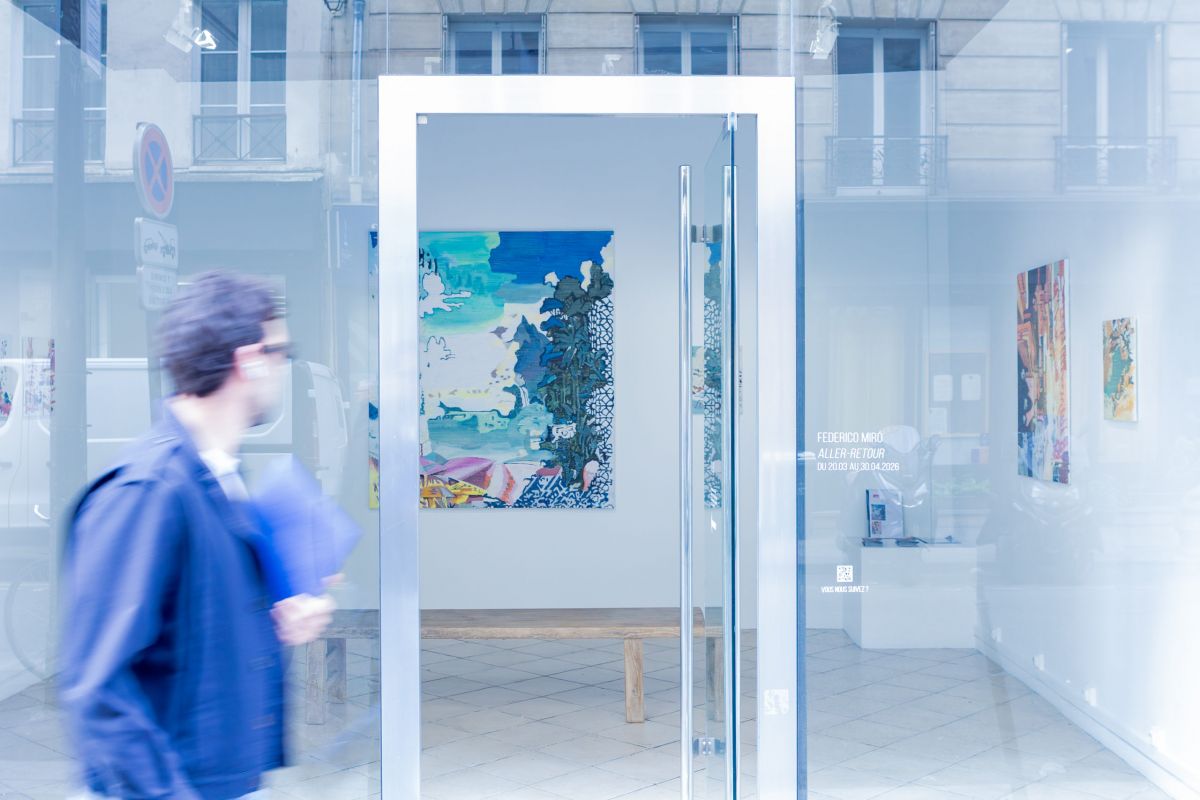
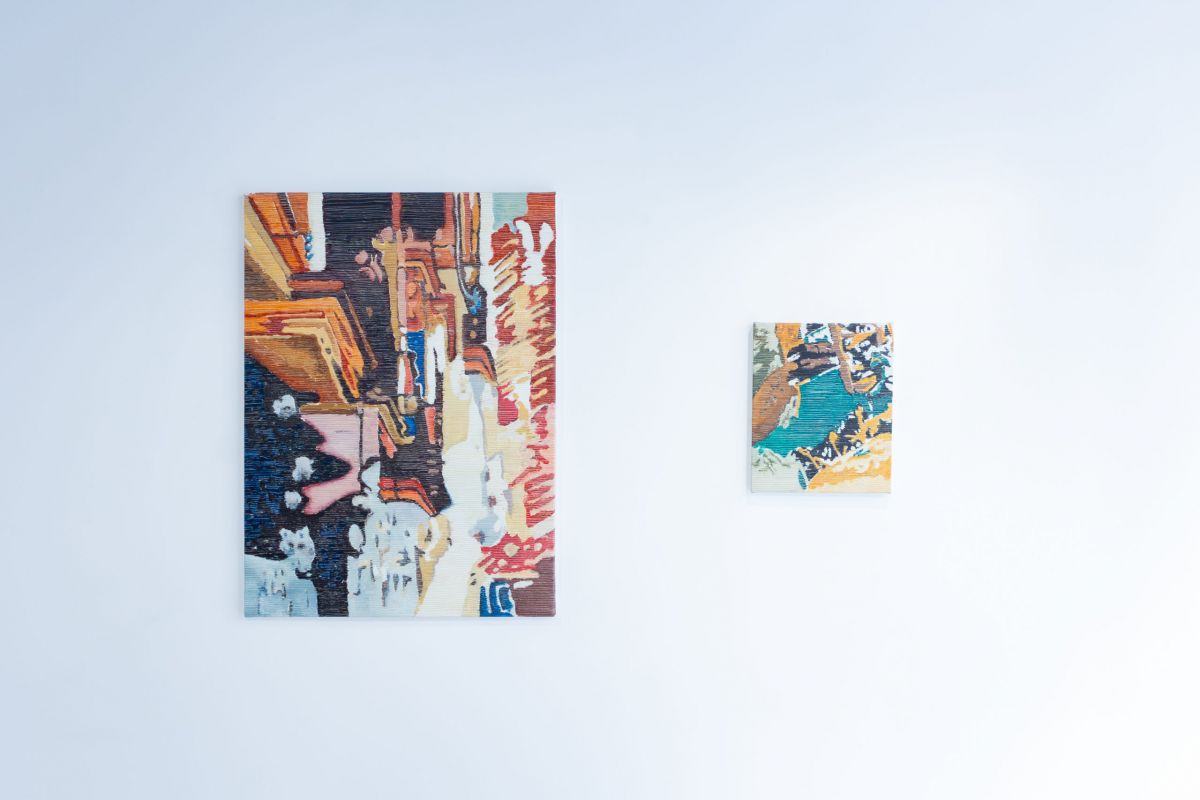
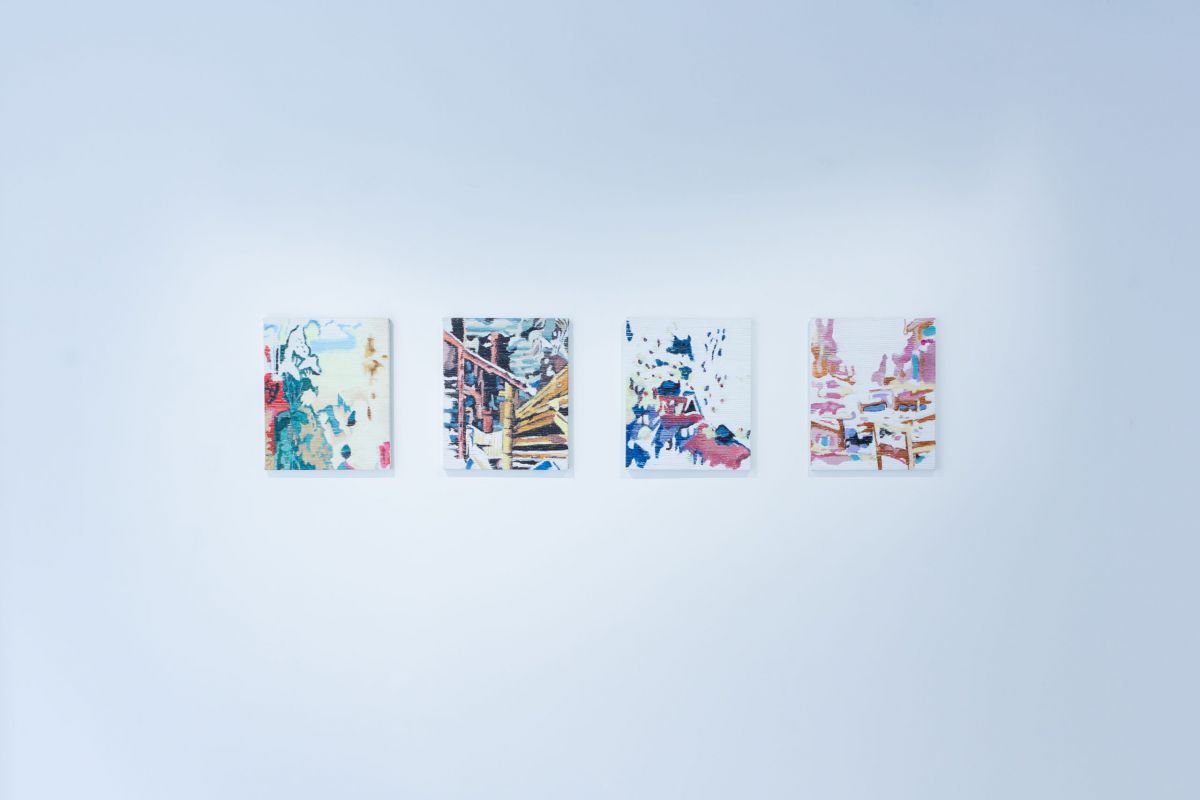
Federico Miró (Málaga, Spain, 1989) has established himself as one of the most promising voices in contemporary Spanish painting. After being shown in various contexts in Spain and internationally, his work is being unveiled for the first time in Paris at this exhibition. This moment marks an important milestone in a career that is rapidly gaining recognition, driven by constant reflection on landscape, image and the material conditions of painting today.
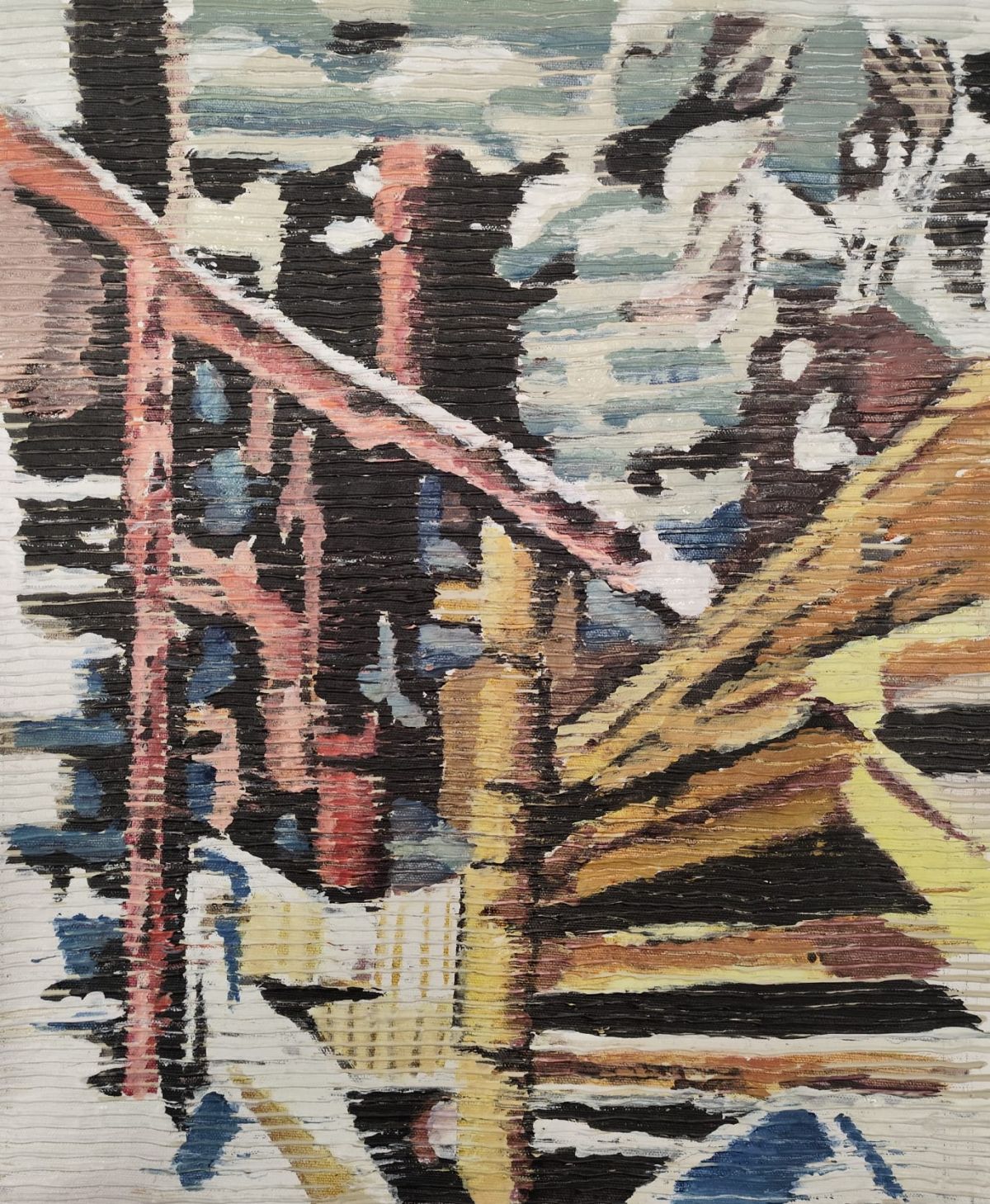
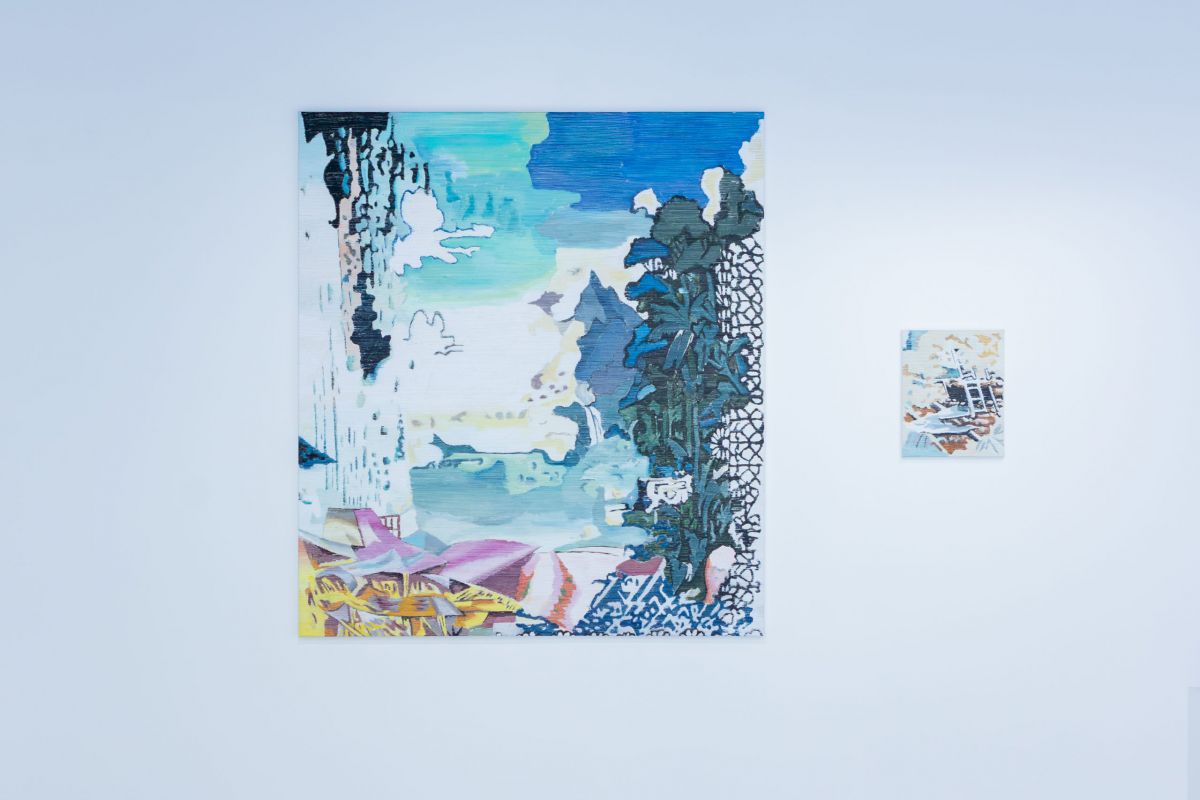
Miró's practice is part of a long process of careful observation, repetition and patient construction. Landscape, the central focus of his work, does not appear as a stable form or a simple representation, but as a field of transformation. Fragmented, abstracted and recomposed, it becomes a space of stratification where memory, experience and temporality intersect. Each painting thus functions as a device for thought, connecting the visible and memory, and engaging both the materiality of the painting and the active attention of the viewer, in a sense close to what Georges Didi-Huberman describes as an image traversed by heterogeneous temporalities.
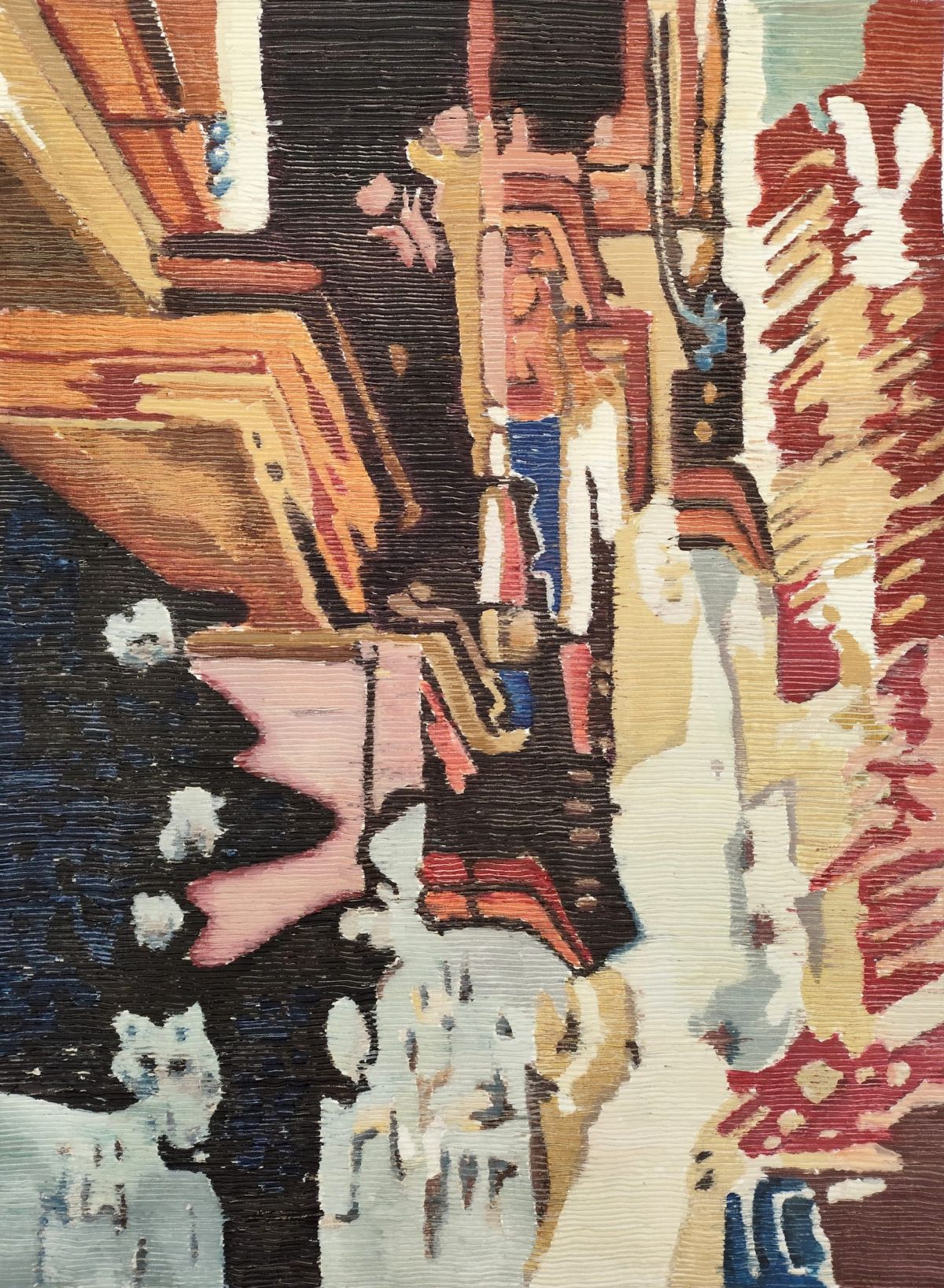
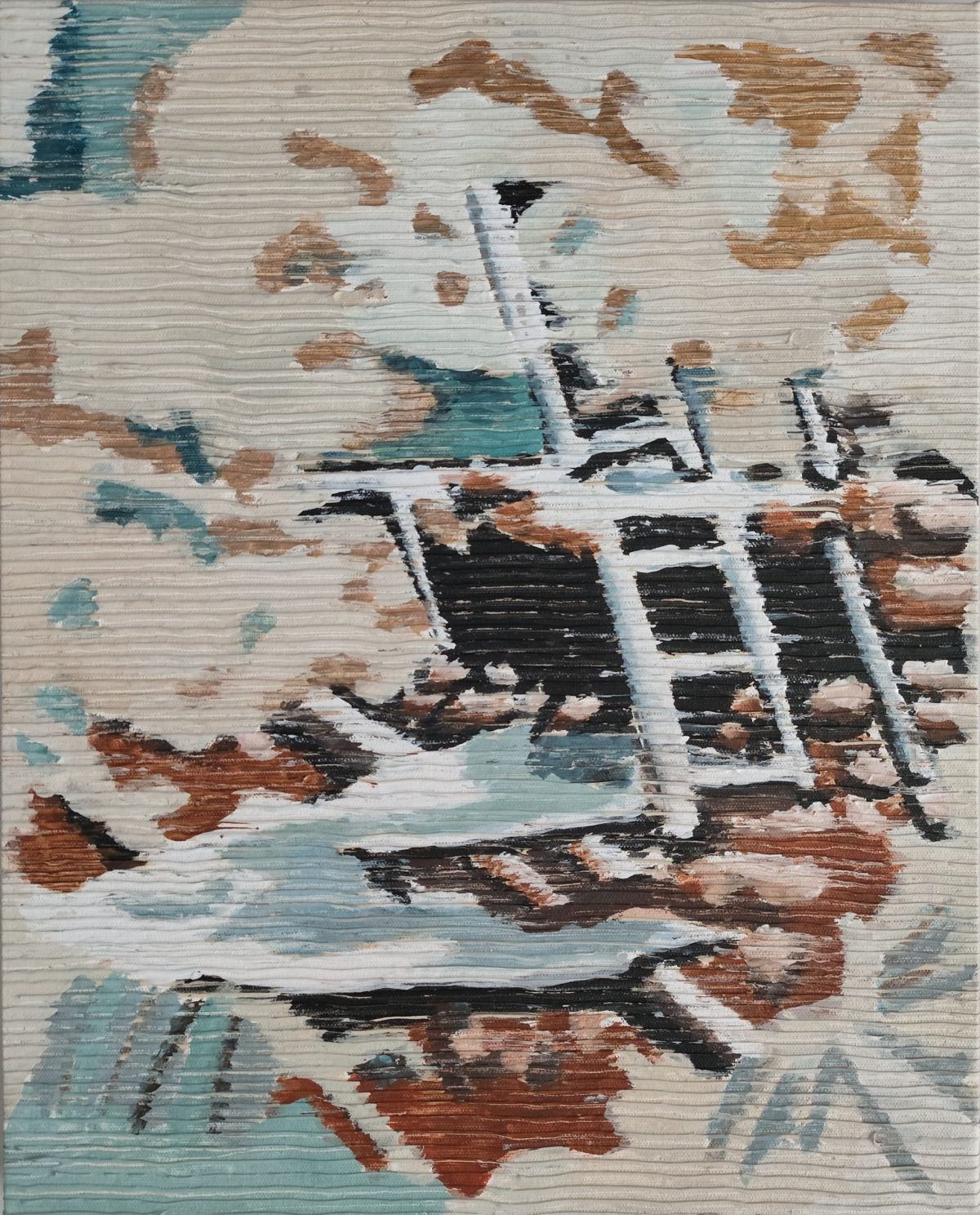
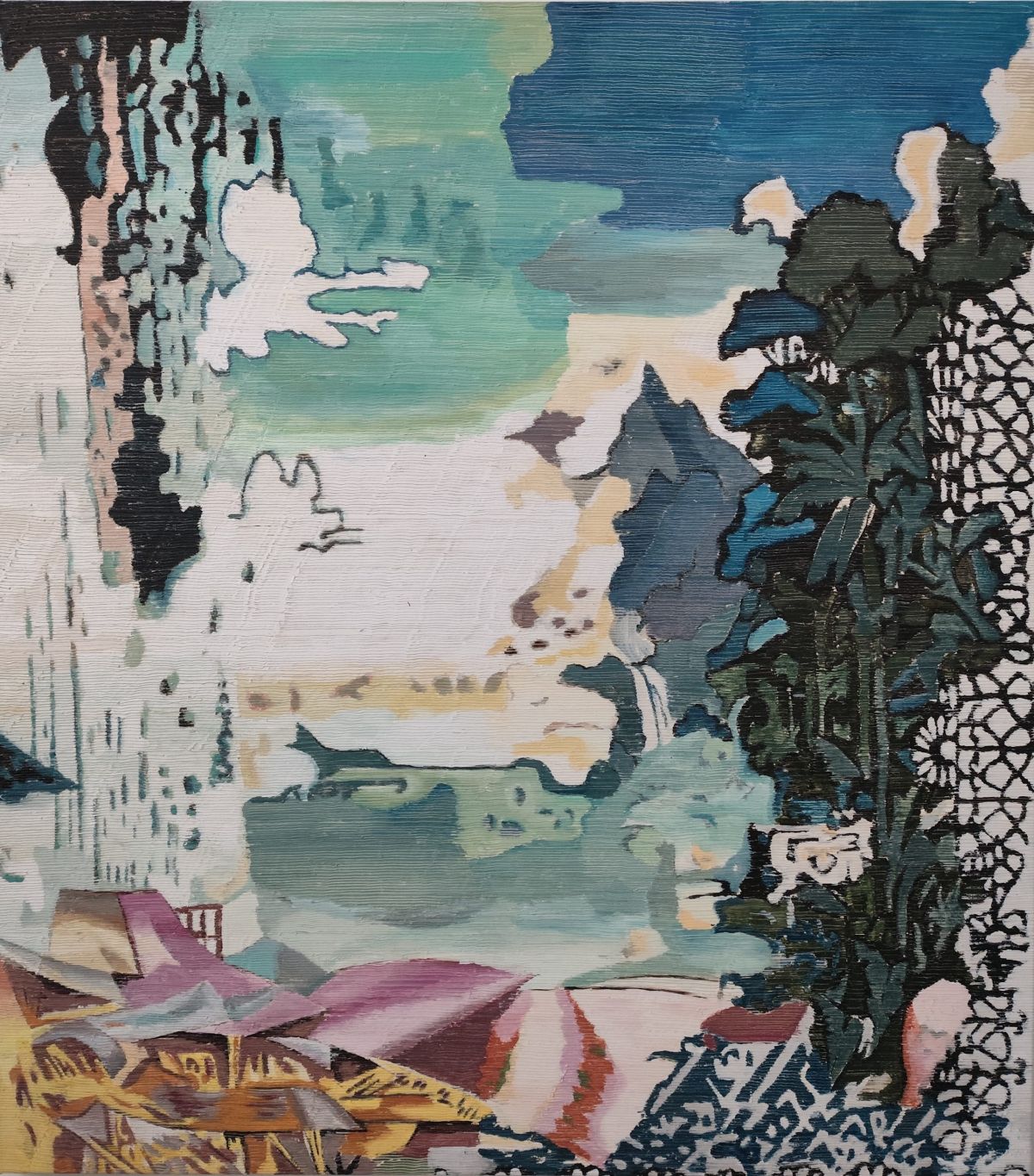
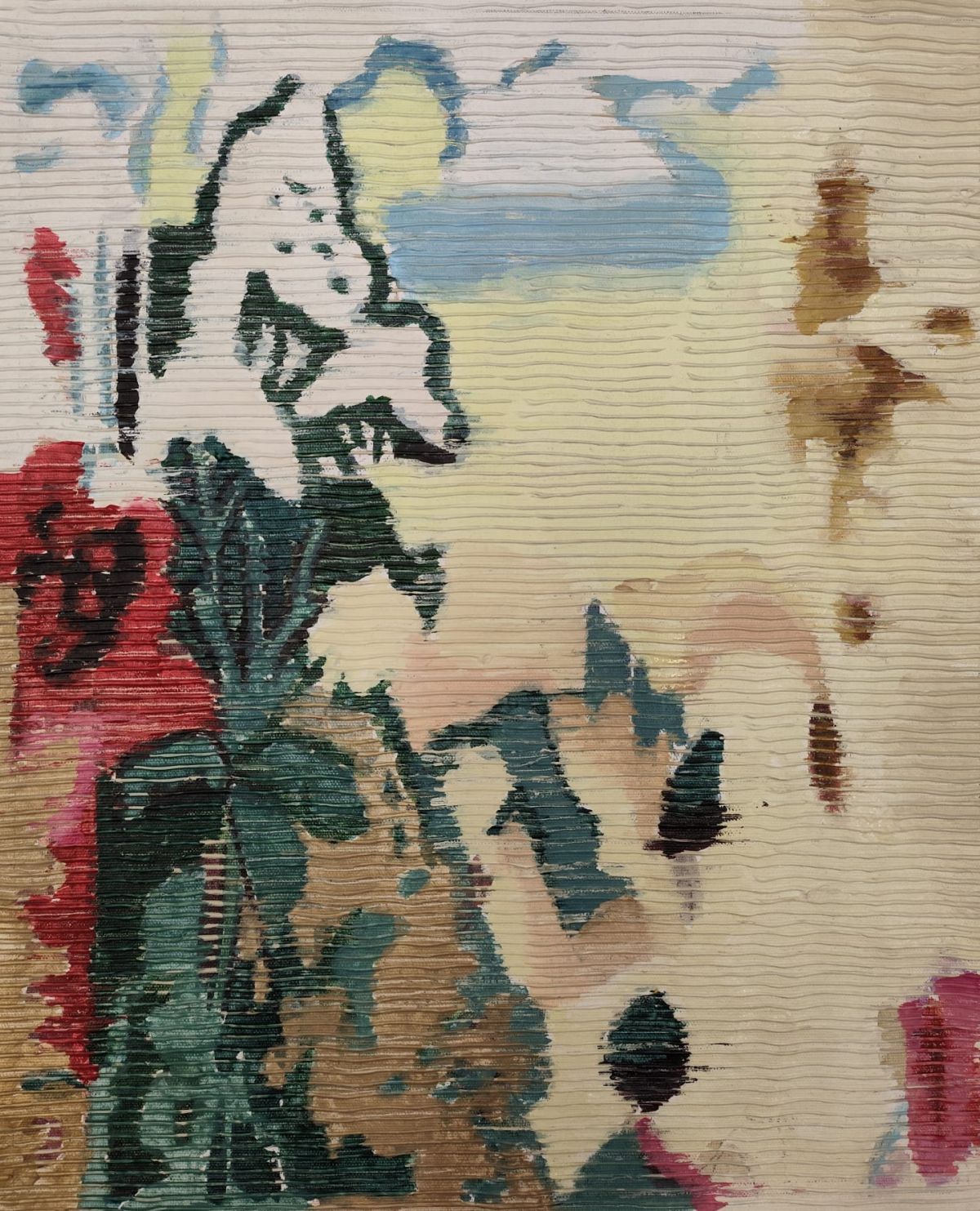
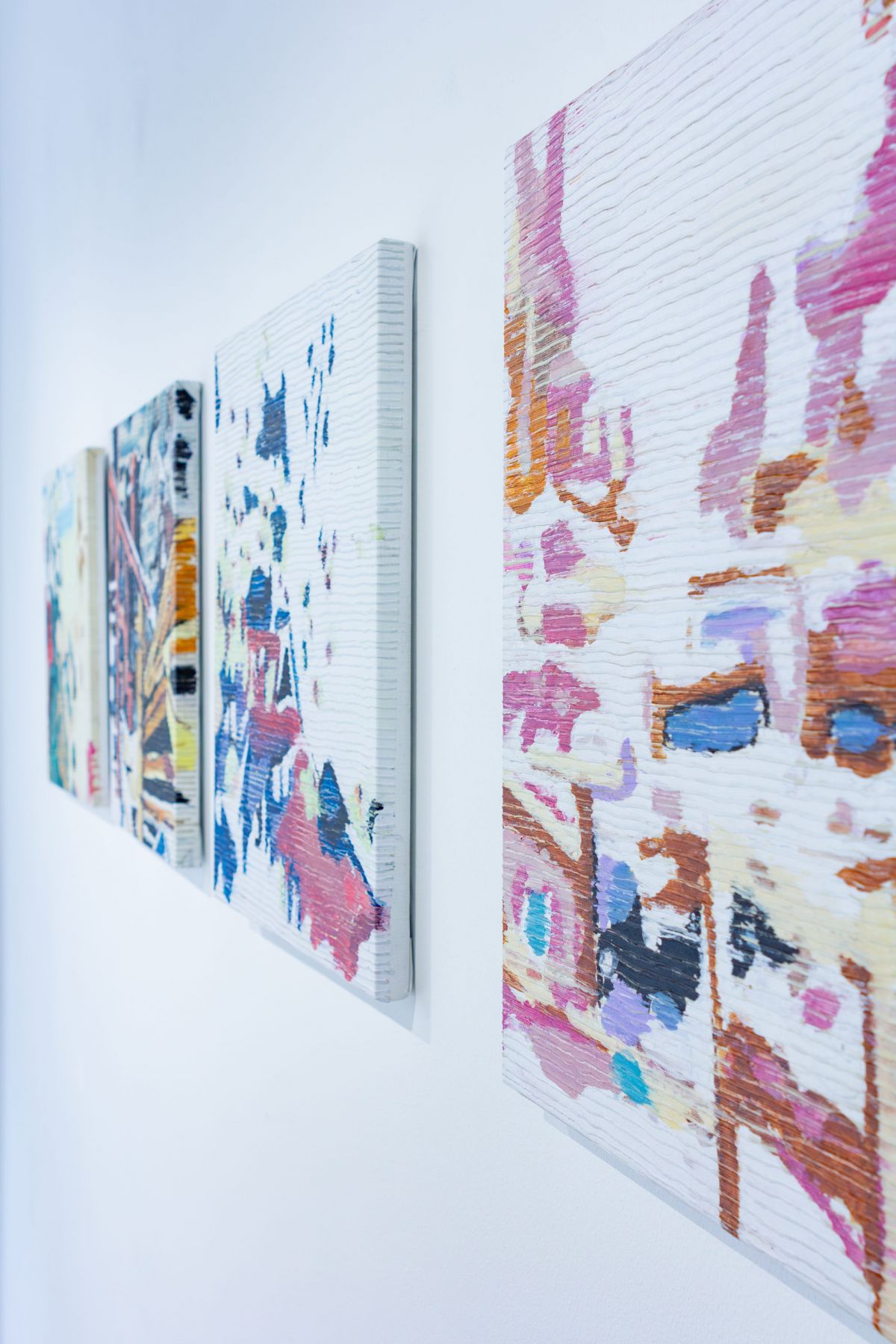
In a context marked by the acceleration of visual flows and the proliferation of images, Miró's painting establishes a gesture of suspension. The surfaces, constructed from layers of acrylic and a network of precise lines, produce patterns that evoke textiles and explicitly refer to a logic of craftsmanship. This craftsmanship affirms a material conception of the image, attentive to processes, duration and conditions of production, and places painting within a reflection on its own means in the face of the immediacy and dematerialisation of the digital.
Miró's compositions bring together natural landscapes, contemporary architecture, ornaments and motifs from diverse cultural traditions. Fragments of everyday life, personal memories and popular rituals — such as Holy Week in Andalusia — are arranged like elements of a recomposed visual memory. In his recent works, the ancient and the contemporary coexist, while the painting incorporates effects of duplication, cutting and displacement of the image. These processes, which evoke the errors or discrepancies characteristic of digital images, produce a field of resonances where craftsmanship and contemporary visual logic come together without merging.
The exhibition thus offers a different relationship with time and the gaze. Between veils, weaves and areas of opacity, the images resist immediate interpretation and open up a space for active contemplation, where matter, memory and landscape meet. Miró's work engages in an experience of painting as a place of duration and thought, where the gaze, slowed down, opens up a more attentive and sensitive relationship with the world.
— Claude Bussac, Head of Art studies at Casa de Velázquez