Franchir le visible
Pierre-Luc Poujol
Loo & Lou Gallery - Haut Marais
07.05 - 17.06.26
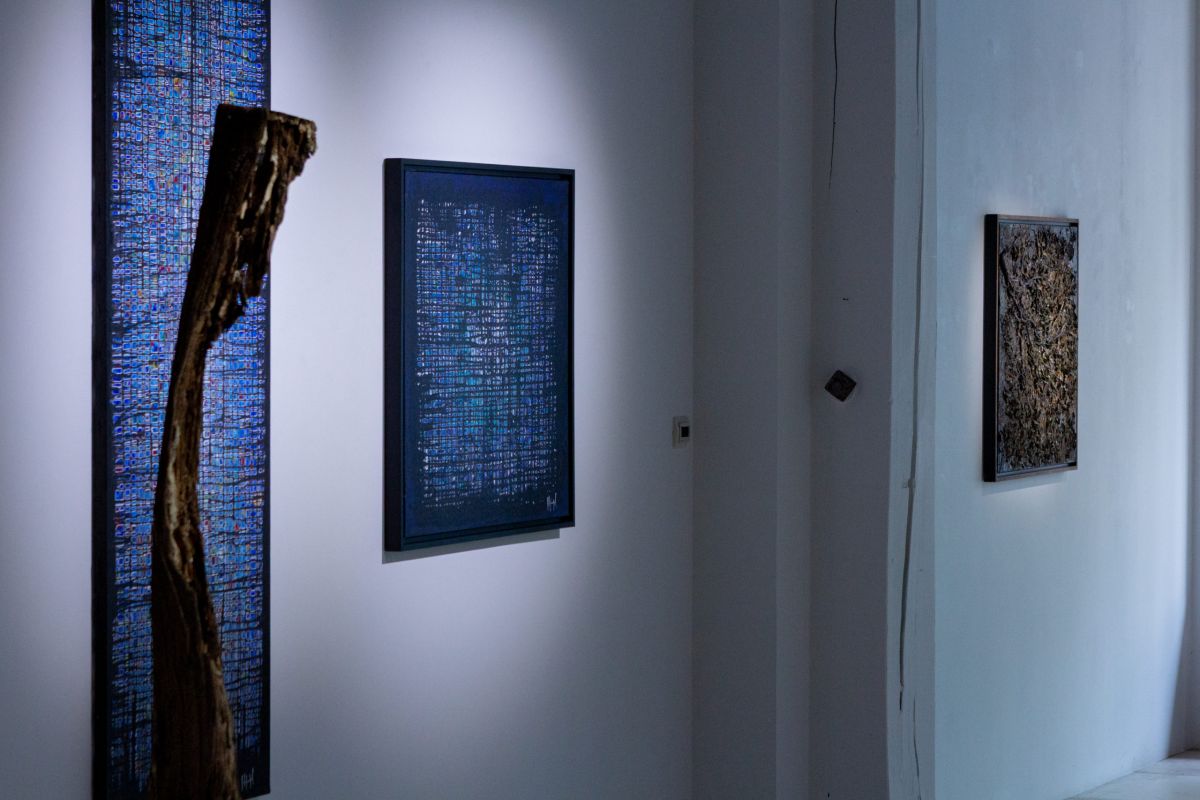
The Path of the Tree
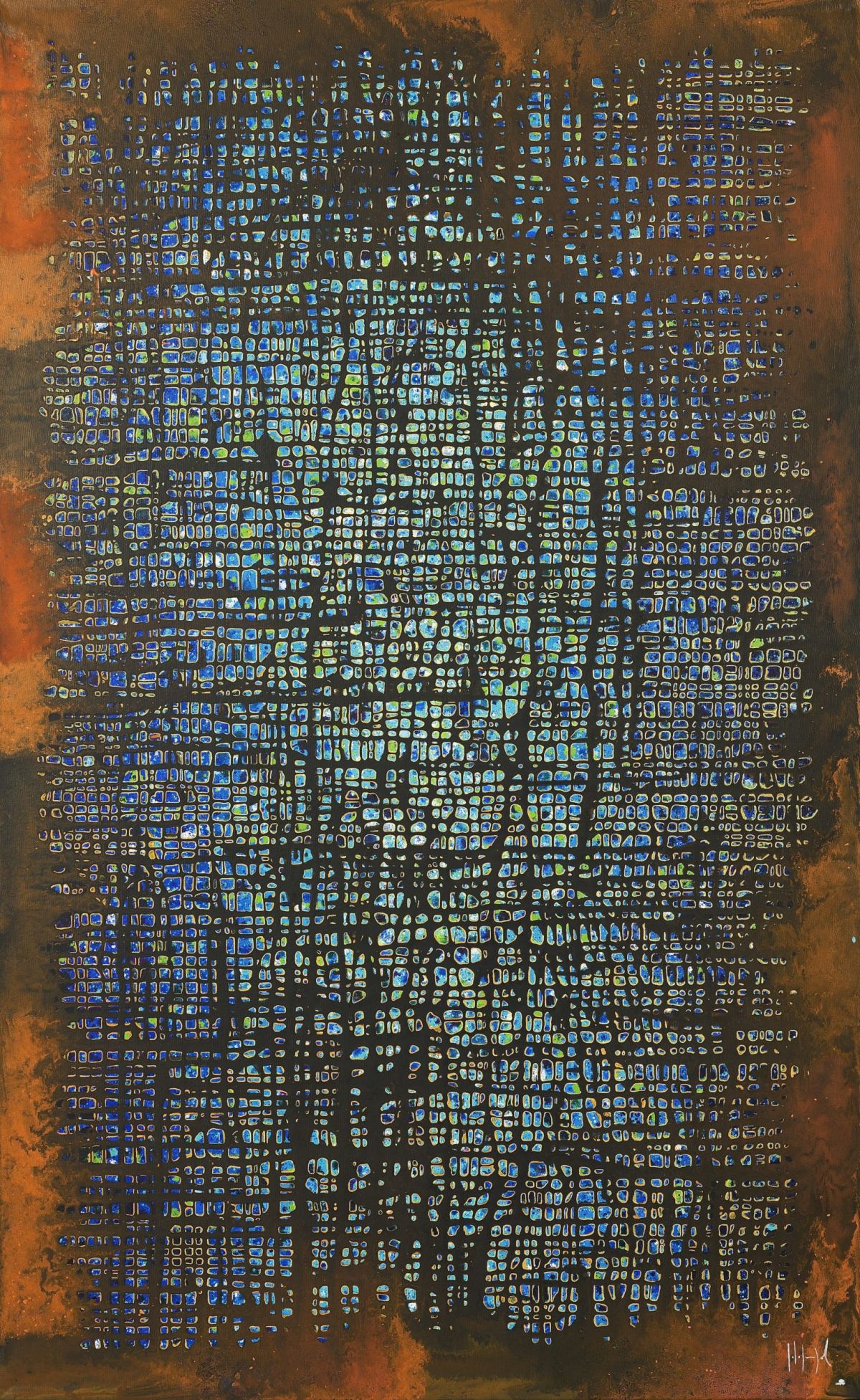
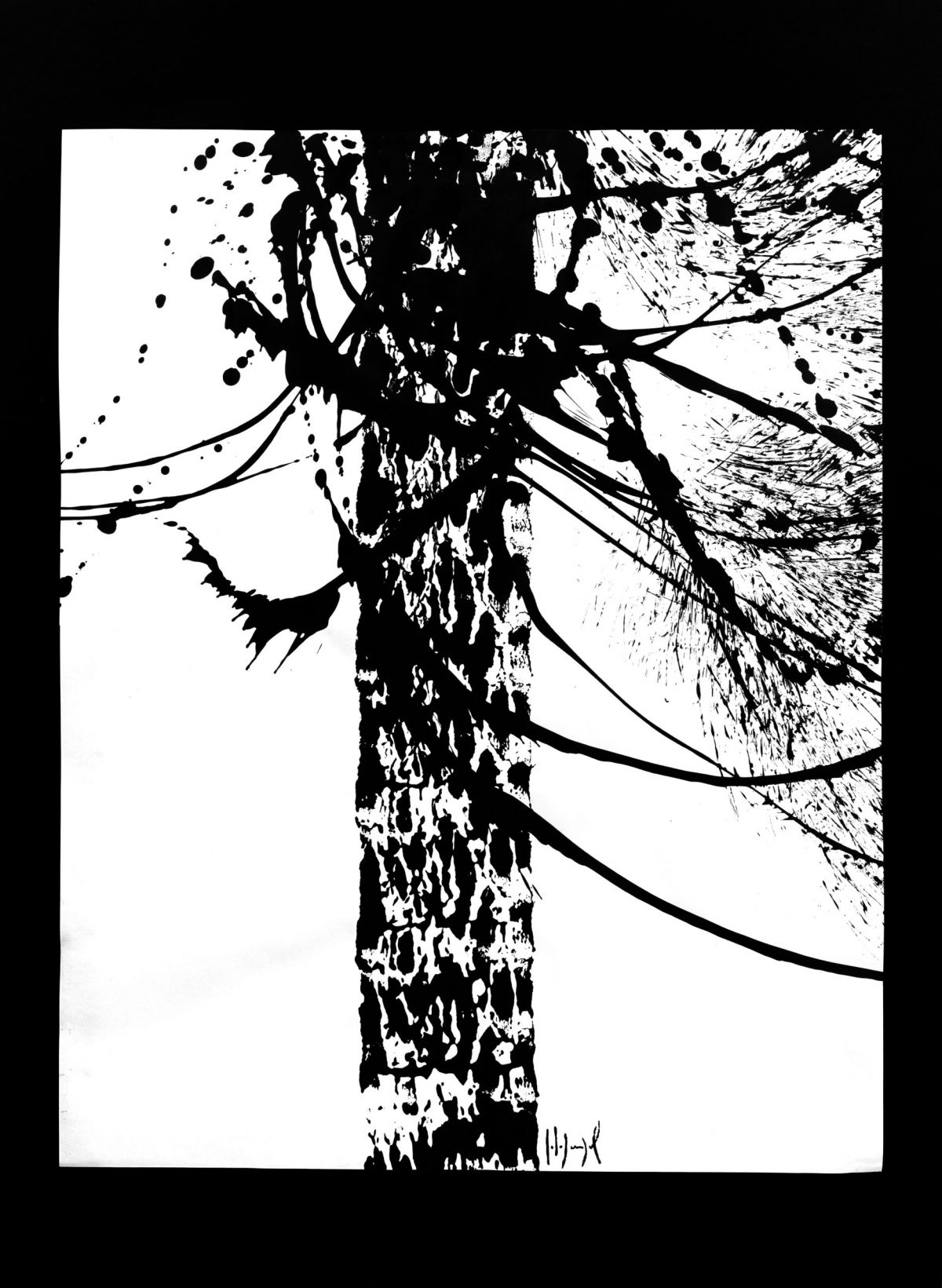
The eye rises, clings. Just as the vital fluid—sap or blood—rises, flowing calmly or surging impetuously, from one cell to another within a living being. But is “cell” really the right word to describe the openwork (sometimes set with a gem-like blue that is not unlike Evi Keller), the expanses, or the gaps that riddle the interwoven surface of Pierre-Luc Poujol’s grids? One might just as well think of alcoves, or even the grid of a stained-glass window: a stained-glass window whose light—its icy clarity or molten gold—would have melted the figurative scenes beyond the visible, beyond this or that subject of sacred history. But whatever the names: these works from the Between the Lines series embrace the trees, as in a marriage that is both deeply physical and deeply mystical; they are born from the imprint of their bark, and the eye, too, embraces them. It follows them upward, like the arms of a child encircling a tree trunk, then leaping from branch to branch and climbing toward the foliage. While, perhaps, the sun, filtered through the canopy, casts a complex checkerboard of light and shadow upon the forest floor.
Pierre-Luc Pujol confides that the tree offers him a sense of “anchor”—he who has been “uprooted.” And one can easily imagine the artist “throwing himself to the ground,” like Virginia Woolf’s Orlando: “she felt the sensation of the tree’s bones running like ribs from a spine here and there beneath her. She liked to think she was riding on the back of the world. She liked to cling to something hard. ” But Pierre-Luc Poujol is above all a devotee of Nietzsche, in whose thought he finds this intersection—this “edge”—that preoccupies him so much, and that he works on so much, between the antipodal polarities of order and chaos, between the harmonious equilibrium of serene stasis and the anarchic bubbling inherent to the living. So it is no surprise that stillness, that rootedness, lasts only a moment, or rather is only a moment.
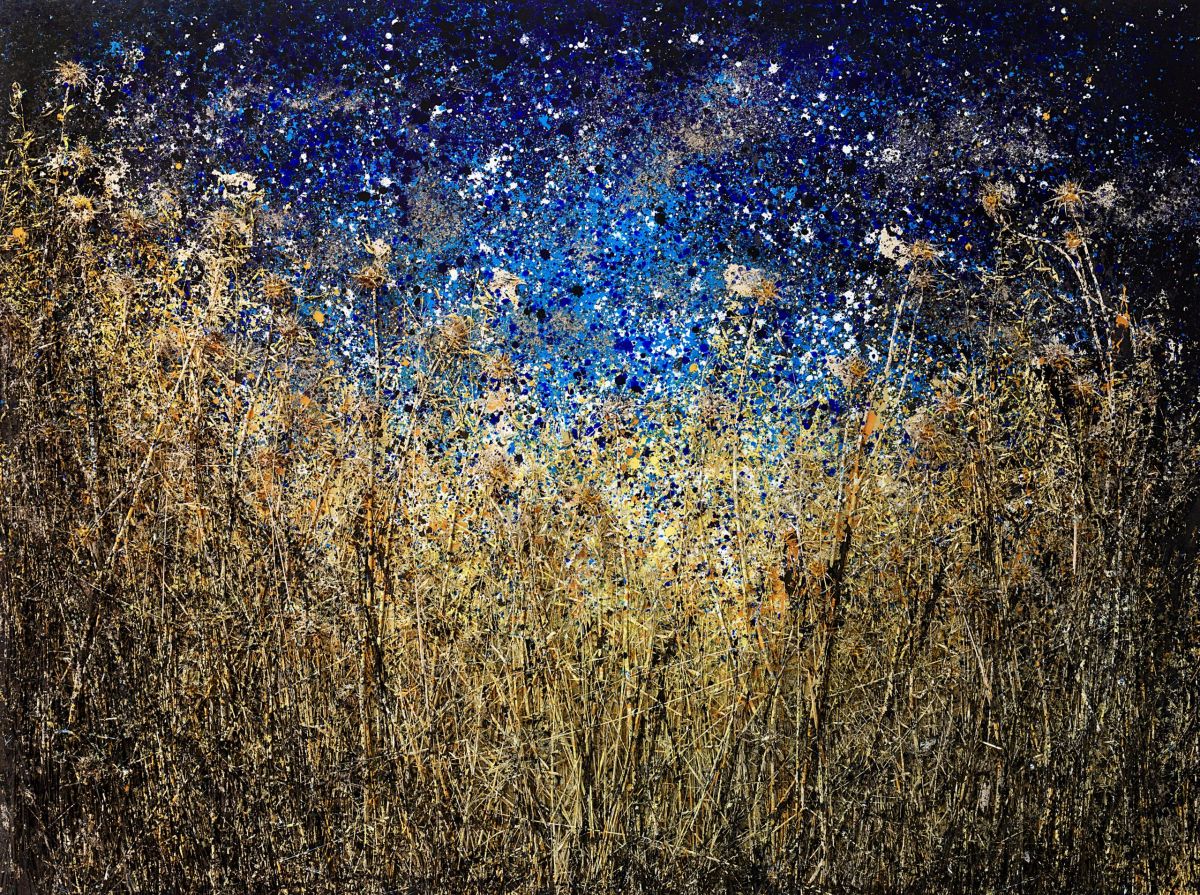
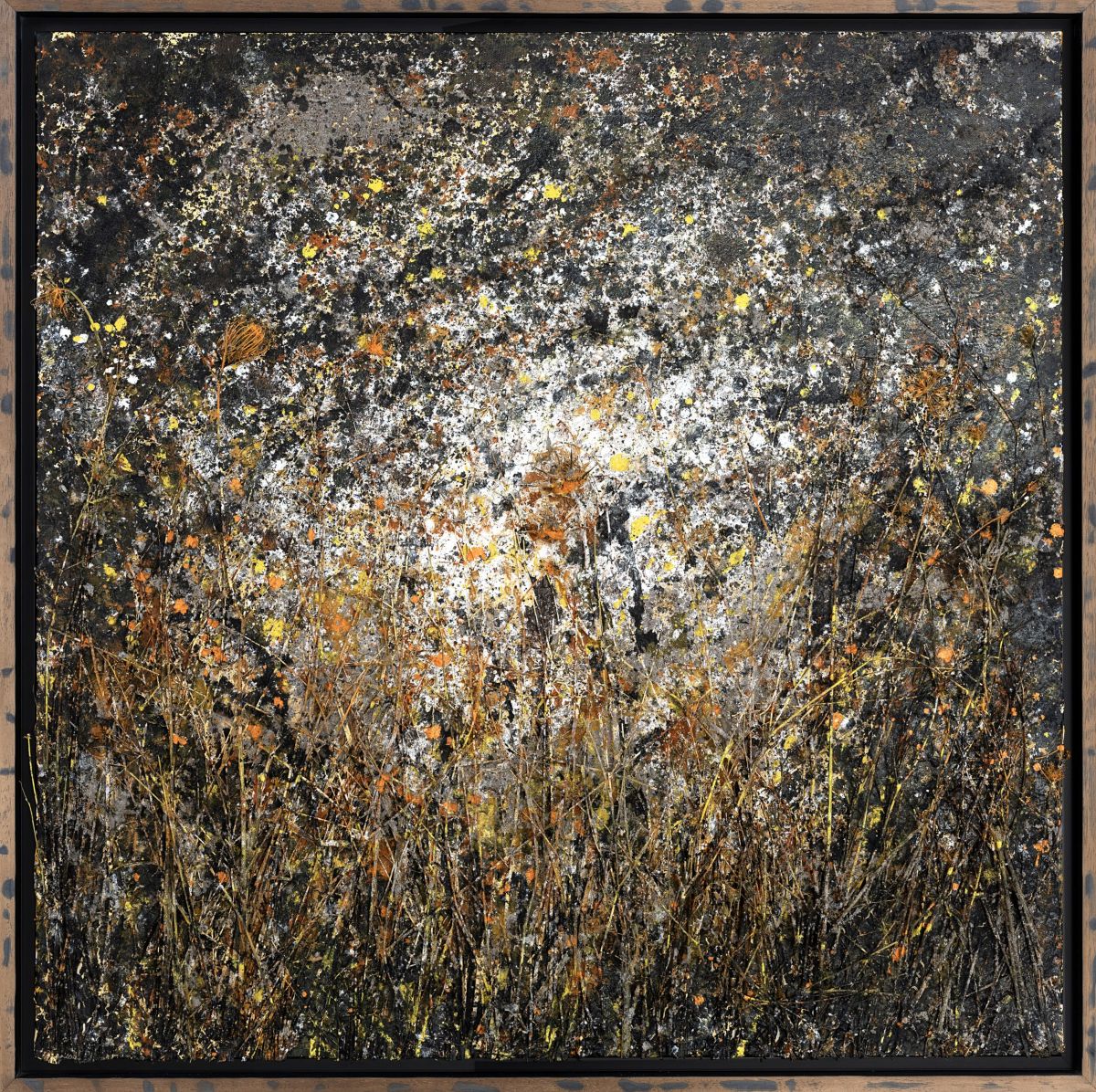
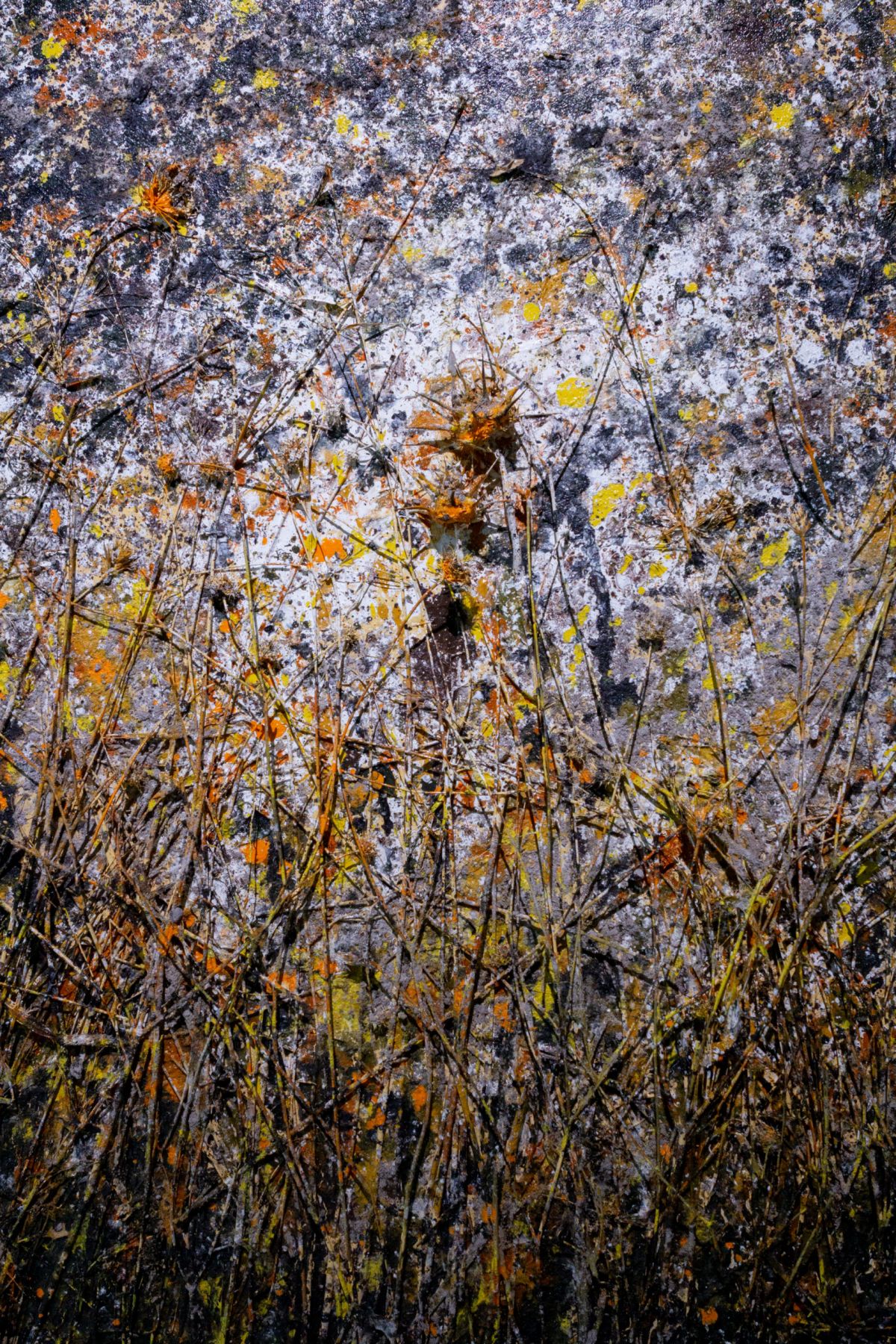
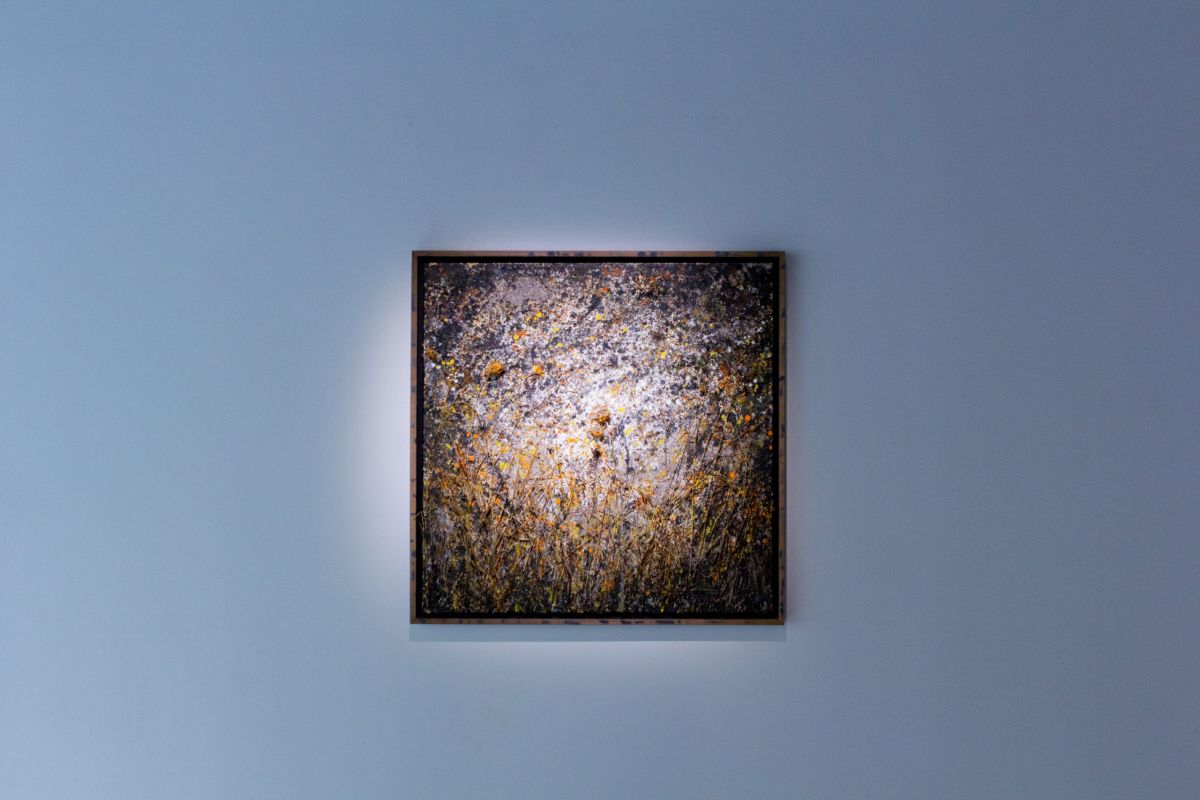
A time that is undeniably very physical, a time with the crumbly texture, the rough edges, and the contours of matter. For it is in this way—through matter—that Pierre-Luc Pujol’s works “take root” in the world: they literally draw from the landscape, from what constitutes it in the most fundamental way. Look at the Lisières series, those silvery surfaces; scratch them, and what falls away will be the ash of charred trees. And these ashes—here and there in these Lisières—bloom into skies that one imagines Van Gogh also saw, and long before them, long before Pierre-Luc Pujol or Vincent Van Gogh, King David: did he not sing, in Psalm XVIII, 1, that “the heavens declare the glory of God, and the firmament proclaims the work of his hands”? The ashes are thus transformed into something else. From the traces of destruction, from the imprint (this imprint like a wound bearing the ugly name of the Anthropocene) of man on the forests, the world begins anew.
And just as Creation is set in motion once more, putting down roots is merely a prelude to departure. No matter how deeply he is rooted in a corner of the forest, no matter how intimately he knows the patterns of the bark, the “man of the woods”—as the artist calls himself, only half in jest—is also a man of the open road. He sets out on his journey, and this art is a journey and a voyage.
Pierre-Luc Poujol is, of course, not the first to have taken these metaphorical paths and trails; German Romanticism, in particular, has gone before him on these paths. Before these two series, Between the Lines and Lisières, then, each viewer can let their gaze wander as they please, moving forward, zigzagging, branching off along the patterns, following veins and twigs, letting themselves be dazzled by a powdery shower of yellows. But, as Novalis would say, the path always leads inward. Let us leave him there, however, he who is the poet of mines and earthly crevices. Let us return to the tree, let us return to our imaginary child from the first paragraph who was climbing his tree. And let us rephrase: the path leads upward.
The grid-like layout of the *Between the Lines* series establishes a structure (in the sense of being “organized”), a network that does not confine. Rather, it subdivides and fragments, much like the way the human brain breaks down everyday experience. And that is undoubtedly why the analytical mind, so quick to rebel when it cannot find its bearings, when it fails to recognize, in the perceptions conveyed by the eyes, the familiar silhouettes of the world, is strangely soothed by the works of Between the Lines. As for the luminous ecstasies of Lisières, it would be ridiculous to attempt to describe them; everyone knows that politeness and decency demand silence in the face of ecstatic phenomena, so let us limit ourselves here, along with the artist, to using the adjective “spiritual.”
This, then, is the metaphorical tree along which Pierre-Luc Poujol’s art ascends—a tree whose roots are very concrete, whose crown is organized thought, and which leads, even higher, toward the heights where the sacred hovers. But let us quickly take our axe and fell this tree: for there is no hierarchy in Pierre-Luc Pujol’s work. No ascent from a lower rung to a higher empyrean that would transcend it. Everything mingles, everything merges; nothing here is separate; perception, reason, and divine experience are one and the same. As if, from the very real ashes of the trees, there remained a “smear on thought” (Orlando) and on the soul.
- Damien Aubel